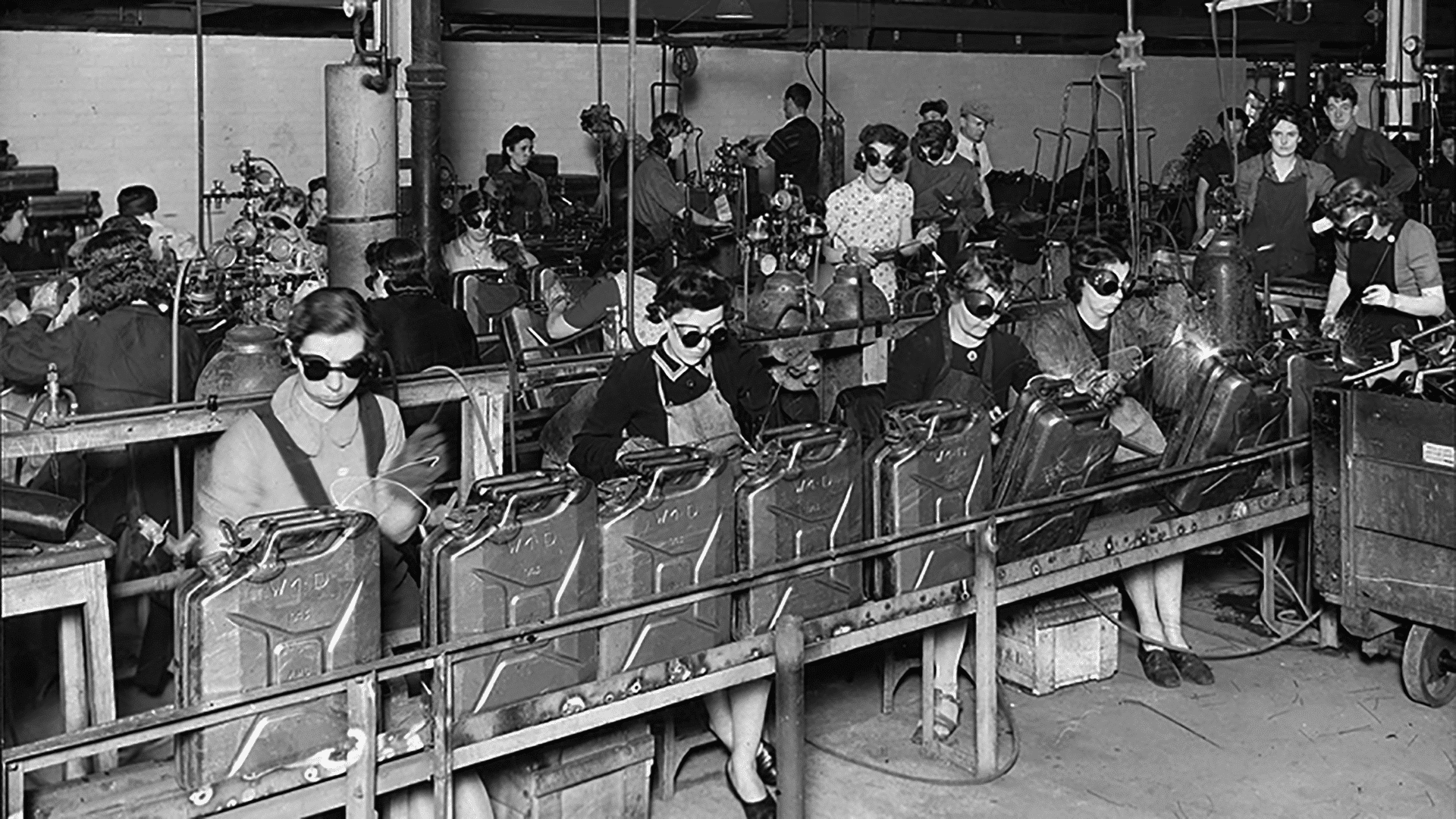
The jerry can was designed in Germany in 1937, copied by the Allies in 1941 and made by the million during the Second World War. It has hardly changed since, because there was little to improve.
Specifications
| Invented | 1937, Germany |
|---|---|
| Designer | Attributed to Vinzenz Grünvogel |
| Original name | Wehrmacht-Einheitskanister (armed forces unit canister) |
| Capacity | 20 litres (about 5 US gallons) |
| Empty weight | About 4 kg (8.8 lb) |
| Adopted by the Allies | 1941, British and American forces |
| Factories in WWII | More than 200 |
| Models in existence | About 1,800 (Danish Fuel research) |
| In Europe by D-Day 1944 | More than 21 million (Danish Fuel research) |
Why is it called a jerry can?
The can was a German design. British and American soldiers called the Germans “Jerries”, and the can became the jerry can. Its German name was Wehrmacht-Einheitskanister.
A brilliant, simple design
It had to be cheap to produce and easy to transport. The square shape made the cans easy to stack and store in small spaces, and more than 200 factories made them during the war.
Colours and what they meant
The cans were coloured by their contents: red for petrol, grey for kerosene, black for diesel and white for gear oil. The idea of telling things apart by colour was later used to find your way around metro systems and hospitals.
The can that won the war
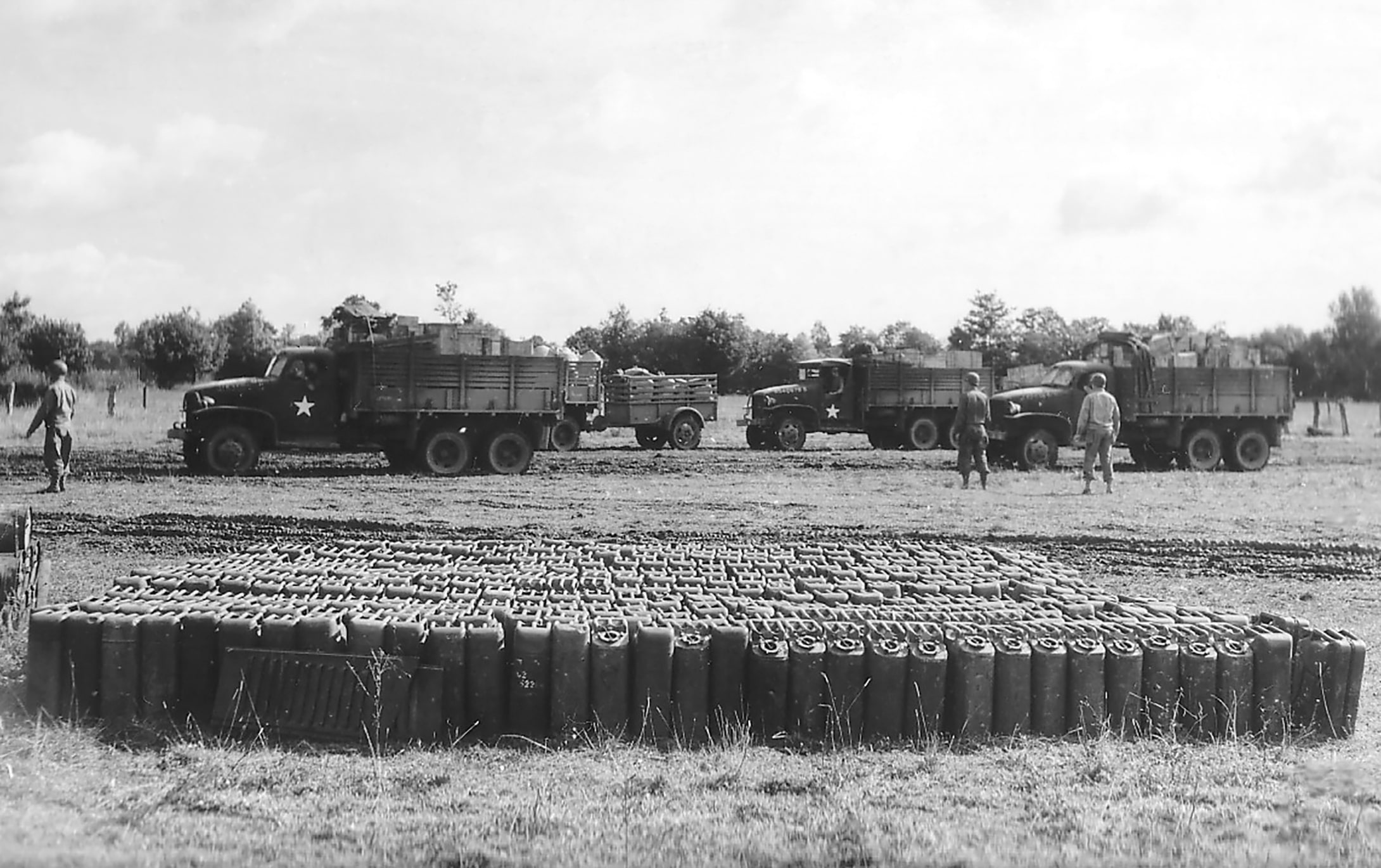
By D-Day in 1944 more than 21 million jerry cans were spread across Europe, and the jerry can went hand in hand with the Willys MB jeep. President Franklin D. Roosevelt is quoted on the part the cans played in the Allied advance:
“Without these cans it would have been impossible for our armies to cut their way across France at a lightning pace which exceeded the German Blitz of 1940.”
President Franklin D. Roosevelt
Recycling during the war
In October 1944, when troop and vehicle movements peaked, 3.5 million jerry cans were reported lost. The problem grew so large that the United States offered rewards to French schoolchildren for collecting empty, discarded cans. About one million cans were recovered that way.
From fuel can to furniture
Danish Fuel collects used military jerry cans from surplus warehouses and upcycles them by hand in Denmark. Our limited WW2 editions are built from original German and British cans from the war years, and the Tribute series uses our own reproduction of the 1939 German can. See how a jerry can becomes a cabinet.
Questions and answers
How much does a jerry can weigh?
An empty WWII jerry can weighs about 4 kg (8.8 lb). It holds 20 litres, about 5 US gallons.
Who invented the jerry can?
The jerry can was invented in Germany in 1937. The design is attributed to Vinzenz Grünvogel. British and American forces adopted it in 1941.
Why is it called a jerry can?
The can is a German design from 1937, the Wehrmacht-Einheitskanister ("armed forces unit canister"). British and American troops called German soldiers "Jerries", and the name stuck to the can. The history of the jerry can.
Are Danish Fuel cabinets made from real military jerry cans?
Yes. Our limited edition cabinets are made from used military jerry cans collected from military surplus warehouses in Europe. Dents and corrosion from their years in service may be visible. The Tribute series (also called Originals) is different: it uses our own reproduction of the 1939 German jerry can, with clean lines and no traces of corrosion.